
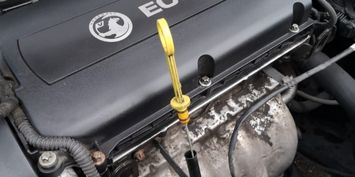
Are car oil dipsticks a thing of the past?
The answer is: it depends.
If you’ve purchased a new vehicle, it’s likely that it doesn’t have a traditional dipstick. This is because “smart” car innovations have digitized oil monitoring. However, if you’re a car enthusiast with an older vehicle, you may still have a traditional dipstick. If this is the case, here’s a quick guide on using your vehicle’s dipstick.

Oil Monitoring Using a Dipstick
Oil monitoring using a dipstick is straightforward, and many vehicle owners prefer it. Not only does a dipstick allow you to access the oil level, but it allows you to determine the appearance and condition of the oil, which can indicate car health.
How to Check Oil Using a Dipstick
After parking your car, remove the dipstick from its tube and wipe all oil off. Push the dipstick back down, making sure to fully insert it. Then, pull it back out and check the oil level on both sides of the dipstick. Some manufacturers recommend you check the oil with a warm engine.
Where Should the Oil Be on the Dipstick?
Dipsticks have various indicators to measure the proper oil level. Common marks you might see are:
- A line
- Two pinholes
- “MIN” and “MAX” (“minimum” and “maximum”)
- Area of cross-hatching
- “L” and “H” (“low” and “high”)
The oil level is good if the oil streak is between 2 marks or within a cross-hatch. Your oil is too low if the oil level is below the minimum mark.
How Should Oil Look on a Dipstick
Your dipstick offers a critical opportunity to evaluate car health.
You’ll want to look at the oil’s color, consistency, and clarity. The oil should be black or brown. If it’s too light or milky in appearance, you might have a coolant leak. Check for metal particles, as these can indicate internal engine damage.
Oil that is thick, dark, or somewhat gritty indicates engine sludge. Engine sludge is perfectly normal and a sign that things are working correctly.
How Often to Change Car Oil
Check your automaker’s vehicle guide for instructions on how often to check and change the oil. Generally, most automakers recommend changing the oil every 5,000 – 7,500 miles.
We hope this answers your questions about how to use a car oil dipstick. Check out our other “how to” articles:
How to Find Out if Your Car Is Under Warranty and What You Can Do About It


 Automotive Roar
Leave a comment