
What are the causes of a scratched wheel?
A scratched wheel is a common issue that many drivers face. It can happen due to various reasons. The following are some of the most common causes of a scratched wheel:
1) Low profile tires: A reduced side wall means less tire between your rim and the road which will inevitably lead to your rim facing damage to potholes and kerbs much easier.
2) Driver error when parking: Scuffed or scratched wheels can occur due to lack of attention from the driver or other drivers nearby trying to park or drive away from their parking space. If you’re not away of the length of your vehicle then you could end up scuffing yours and somebody else’s wheels and body work.
3) Punctures: Punctures lead to air escaping out and the tire will start to lose pressure. This will result in the car driving over small rocks and other objects which will cause scratches on the wheels.
4) Random objects/debris & potholes: When you drive your car over an object that is too big for the tires to cover, such as a piece of wood or a big pothole, then this will cause scratches on your wheels.
5) High kerbs: If you’re not used to parking next to a high kerb then the chances of you scraping your pristine wheels are somewhat high – particularly if you’re not paying attention and rush to park your vehicle.
Repairing Scratched Wheels
Please note: This is not an exhaustive list to get a pro finish to your rims. If you’re looking for a guide to make your wheels look less beaten then follow the steps below. For a flawless finish we recommend taking your rim(s) to a professional alloy refurbishment garage.
Top Tip
If the damage is very minor you can skip the below steps and simply hide most of the scratch with a touch-up pen.
Step 1: Grab a bucket of soapy water and a sponge and begin thoroughly cleaning the entire rim. Remember to add soap (regular dish soap will do) as this helps to break down the brake dust on the surface of the rim and remove any stubborn stains that may be there.
Step 2: Tape around the damaged area and use one of the following depending on the damage severity:
- Scuff pad/buffer (surface scratch) – After using a scuff pad on a light scratch, you can simply buff over the area with a cutting paste or build back up the layers with a clear coat after cleaning and drying the area down.
- Sand paper (moderate/deep scratch) – Sand the area with 400-grit sand paper to even out the aluminium and remove any sharp edges.
- Dremel (Multiple deep scratches) – To speed up the process and save your fingers a Dremel tool works great, especially for multiple scratches.
Step 3: For light scratches simply build up the layers of paint with clear and/or paint. For deeper scratches, use an alloy filler putty to fill in the deep crevices.
Step 4: Sand the area smooth with the rim using 600-grit sand paper.
Remember!
The higher the sandpaper grit, the smoother the finish will be.
Step 5: Clean and dry the rim and then begin carefully covering the areas around your repair so you don’t get overspray on the undamaged areas.
Step 6: With your base coat, begin by adding 2 light layers of paint – allowing for approximately 20-30 minutes drying time in between coats (read instructions on your spray can).
Step 7: Apply 2-3 layers of clear coat, again, allowing time in between coats for it to fully cure.
Step 8: Remove the masking tape and leave the paint to fully cure for at least 24 hours in dry location for the best results.
Plasti-dip Your Wheels
Plasti Dip is a rubberized coating that can be applied to any surface. It can be applied in a variety of colors, and it is easy to remove if your apply more than 2 layers of paint. Dip Your Car is a great source for breaking down how you can properly dip your wheels.
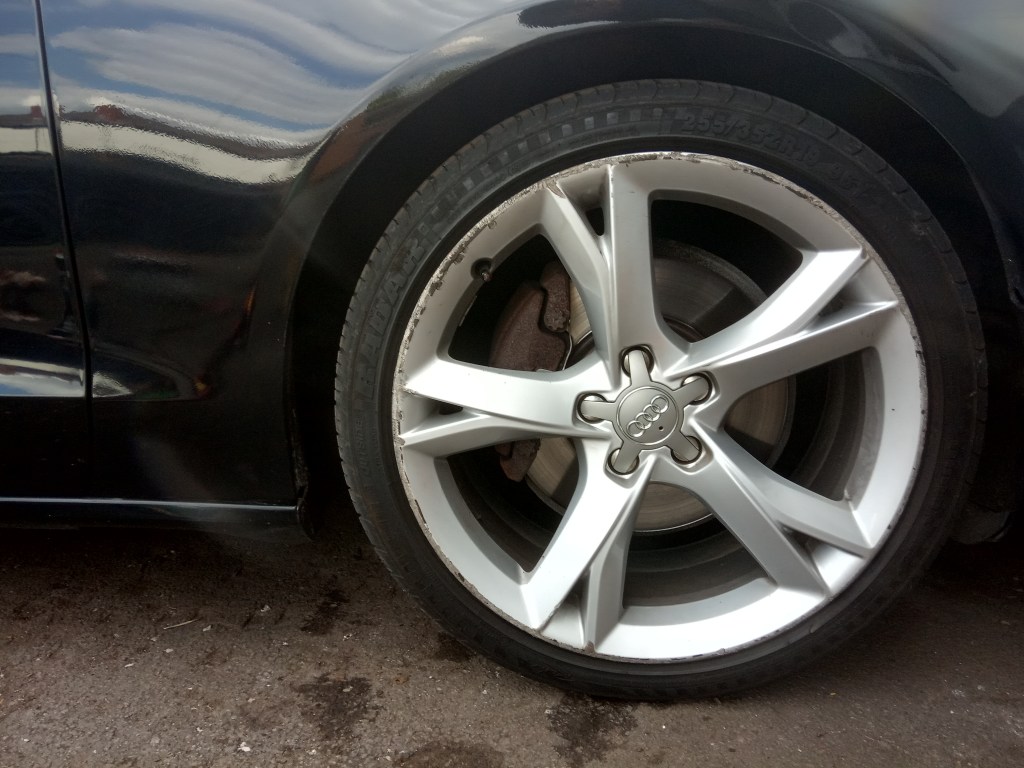
This method is the fastest route to hiding your scuffed/scratched alloys, especially if you’ve been considering a color change. And although it’s not a permanent fix, it certainly makes hiding scratched rims less of an eye sore. Below is a before and after result of Plasti Dips capabilities on an Audi A5.


 Automotive Roar
Leave a reply to Why Do Some Cars Have A Car Oil Dipstick And Others Don’t? – Automotive Roar Cancel reply